
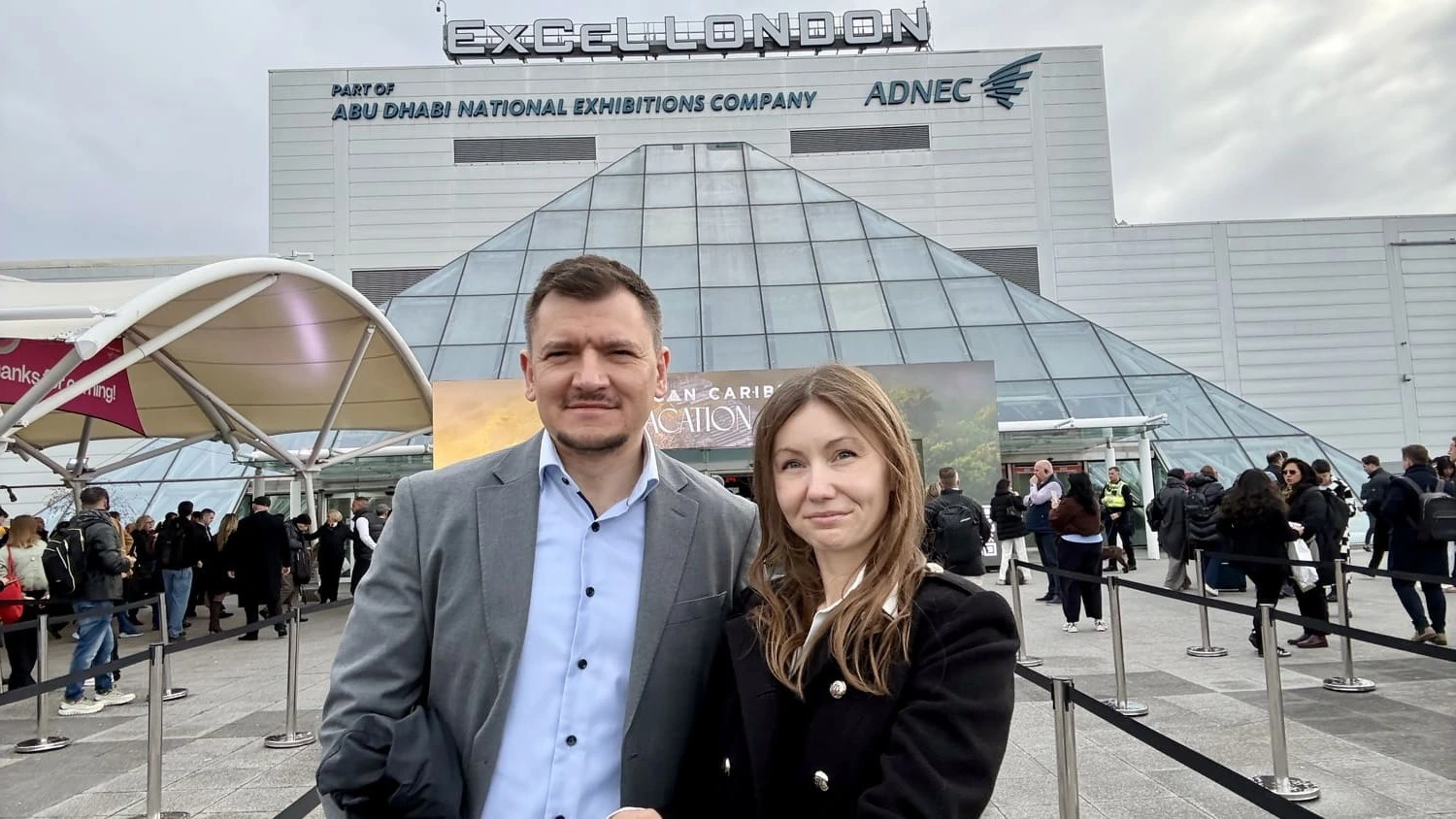
Our team is back from ExCeL London, and the calendar for the next few weeks is already filling up with demos. Here are a few thoughts we brought home.
WTM London 2026 ran from November 3 to 5 at ExCeL London under the theme “Resilience, rebound & reinvention: the next era of global travel.” The show opened with the launch of the WTM Global Travel Report, prepared with Tourism Economics, which forecasts a record year for international arrivals. AI ran through the conference program and through most of the conversations we had on the show floor. The other big thread was how travelers are reshaping their budgets and choosing where to go.
Key Topics and Highlights
- AI moves from “if” to “where.” According to the report, 87% of tourism organizations were already using AI in early 2026, and operational efficiency came out as its most effective use. Our conversations at the show matched the data. Fewer people asked what AI could do in theory, and more of them arrived with a specific process they wanted to improve.
- Agentic AI and AI discoverability. Over a third of travelers (36%) now trust agentic AI to complete a booking for them, and among 18–34-year-olds that figure climbs to 54%. Tourism Economics concludes that being discoverable by AI assistants is now an immediate priority for destinations and suppliers.
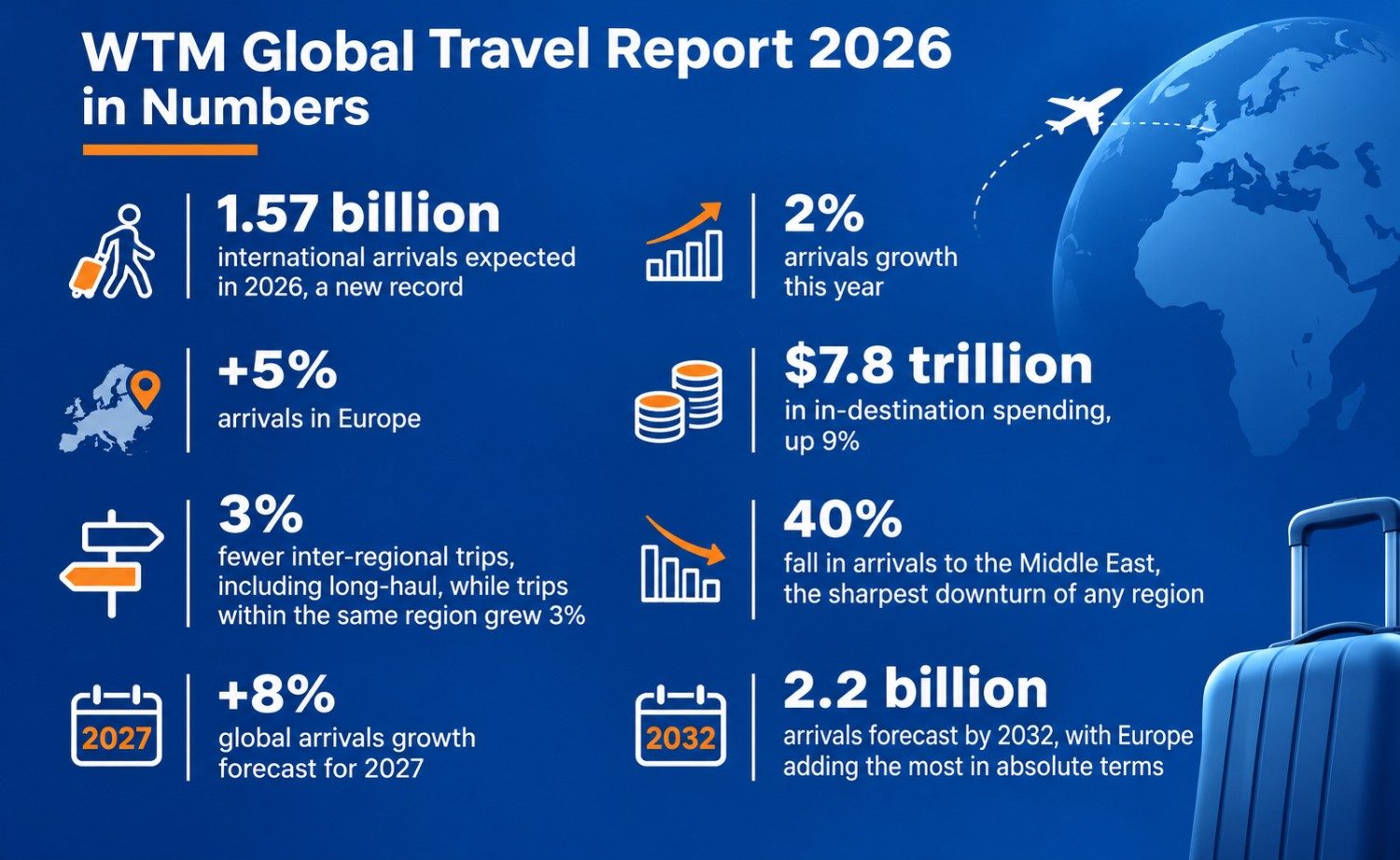
- Value-seeking without cancelling. Travelers aren’t giving up their trips. They’re moving money around instead, and 56% of respondents want to save on some parts of a trip while splurging on others. Closer destinations are gaining from this shift, which helped push Europe’s arrivals up by about 5%.
- Experiences and a new kind of luxury. Itineraries are increasingly built around active experiences and food rather than passive sightseeing. Around 60% of surveyed travelers strongly want a luxury holiday, though for most of them luxury now means exclusive access and deeper connection, not material display.
Market Facts and Numbers from the WTM Global Travel Report 2026
The WTM Global Travel Report 2026, produced with Tourism Economics, an Oxford Economics company, was released on the show’s opening day. Here are the figures that stood out to us:
Our Team at WTM London 2026
This year we came to London without a stand. Instead, we met people at meeting points agreed in advance, and the format paid off. We had a lot of productive meetings with potential clients, and we also caught up with current clients and partners.

One pattern came up again and again. Many of the tour operators and DMCs we spoke with are looking for a ready-made solution rather than building their own system from scratch. For some of them, GP Travel Enterprise could be a good fit. It’s built for mid-to-large DMCs and tour operators that manage multi-day products, and it covers the workflow from quote to invoice.
And yes, everybody was talking about AI. What changed since last year is that quite a lot of people now know exactly where they want to apply it. That makes for much better conversations, because we can start from a real process instead of a general idea.
Now a lot of demos and follow-up calls await, and we’re looking forward to every one of them.
See You at WTM London 2027
We’re already planning our return to ExCeL London next year. WTM London 2027 runs November 2–4, and we’d be glad to meet you there. Until then, if anything in this recap sparked a question, drop us a line. See you in London!


